Exploring the Heart of Laos: Must-See Cultural Landmarks

Laos, a land of lush landscapes and deep cultural roots, is a treasure trove of experiences waiting to be uncovered. From its serene Buddhist temples to bustling local markets, this enchanting Southeast Asian nation is rich in history, spirituality, and authentic charm.
Article Sponsored By: Parking Lot Striping Jacksonville
If you’re planning a visit, don’t miss out on these cultural landmarks that capture the essence of Laos and offer a glimpse into its vibrant heritage.
1. Pha That Luang (The Great Stupa)
Located in the capital city of Vientiane, Pha That Luang is arguably the most important cultural and religious monument in Laos. This massive gold-covered stupa is a symbol of Lao sovereignty and Buddhism. Dating back to the 3rd century, it has undergone numerous reconstructions but remains a stunning testament to the country’s architectural brilliance. Visiting during November’s That Luang Festival provides an unforgettable experience, as the site becomes a center of vibrant celebrations and rituals.
2. Wat Xieng Thong
In Luang Prabang, a UNESCO World Heritage Site, Wat Xieng Thong stands as a shining example of traditional Lao temple architecture. Built in the 16th century, its intricate designs and gilded mosaics tell stories of Buddhist teachings and local folklore. The sweeping, low-hanging roofs of the temple are iconic, and its location along the Mekong River makes it a picturesque spot for reflection and photography.
3. The Plain of Jars
Mysterious and awe-inspiring, the Plain of Jars in Xieng Khouang Province is an archaeological site that continues to baffle historians. Thousands of stone jars, some as large as three meters in diameter, are scattered across several fields. Believed to date back to the Iron Age, these jars have inspired countless legends, with some saying they were used for brewing rice wine for ancient feasts. A visit here is not only an exploration of history but also an opportunity to witness the stunning rural landscapes of northern Laos.
4. The Kuang Si Waterfalls
While Kuang Si Waterfalls near Luang Prabang may not be a “landmark” in the traditional sense, they are a significant cultural and natural attraction for both locals and tourists. The cascading turquoise waters are surrounded by verdant jungle, creating a tranquil escape. Nearby, the Tat Kuang Si Bear Rescue Centre works to protect the region’s endangered Asiatic black bears. Many visitors combine their trip to the waterfalls with a visit to this inspiring sanctuary.
5. Pak Ou Caves
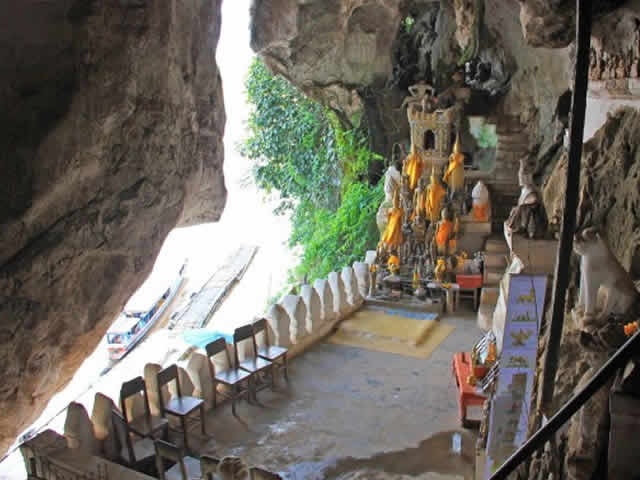
The Pak Ou Caves are a spiritual retreat located where the Mekong and Nam Ou rivers meet. Accessible by a scenic boat ride from Luang Prabang, these caves house thousands of Buddha statues left by worshippers over centuries. The site holds immense spiritual significance and offers a chance to reflect amidst its serene and sacred atmosphere.
6. Bolaven Plateau
For travelers looking to explore rural Laos, the Bolaven Plateau is a cultural gem. Known for its coffee plantations, stunning waterfalls, and ethnic villages, the plateau offers a glimpse into the lives of the local tribes, including the Alak, Katu, and Laven. Many of these communities still practice traditional customs, and guided tours provide insights into their rich cultural practices.
7. COPE Visitor Centre
In Vientiane, the COPE Visitor Centre offers a deeply moving experience. Dedicated to educating visitors about the legacy of unexploded ordnance (UXO) from the Vietnam War era, the center also showcases the resilience of the Lao people. Exhibits feature personal stories, artifacts, and the organization’s efforts to provide prosthetics and rehabilitation services to those affected by UXOs. It’s a sobering but essential stop to understand Laos’s modern history.
8. Si Phan Don (The 4,000 Islands)
While not a singular landmark, Si Phan Don is a unique region in southern Laos where the Mekong River fans out to create countless small islands. Among them, Don Khon and Don Det stand out for their cultural significance, featuring old French colonial bridges and relics from the region’s time as part of French Indochina. This peaceful archipelago is perfect for cycling, kayaking, or simply soaking in the slow pace of life.
9. Phou Si Hill
A central landmark in Luang Prabang, Phou Si Hill offers breathtaking panoramic views of the city and its surrounding rivers. Climbing the 300 steps to the summit is rewarded with a stunning sunset view and the sight of That Chomsi, a golden stupa perched atop the hill. Along the way, visitors can explore smaller temples and shrines, each adding to the spiritual ambiance of the journey.
10. Champasak and Wat Phou
The ancient temple complex of Wat Phou in Champasak Province is another UNESCO World Heritage Site and a testament to Laos’s historical connections to the Khmer Empire. This pre-Angkorian temple complex is nestled at the base of Phou Kao Mountain and provides visitors with a serene and spiritual experience amidst ancient ruins. Time your visit during the annual Wat Phou Festival in February for traditional music, dance, and rituals.
Laos is a great place to visit. Laos offers a profound sense of connection to history, spirituality, and community through its cultural landmarks. Whether you’re exploring the architectural grandeur of Wat Xieng Thong or pondering the mysteries of the Plain of Jars, every site tells a story that deepens your understanding of this captivating country. Be sure to include these destinations in your travel plans to create unforgettable memories of Laos.
Thank you for visiting our site. If you have any comments or questions please contact us today. We also ask that you help us keep this blog going by visiting our sponsor Jacksonville Parking Lot Striping.